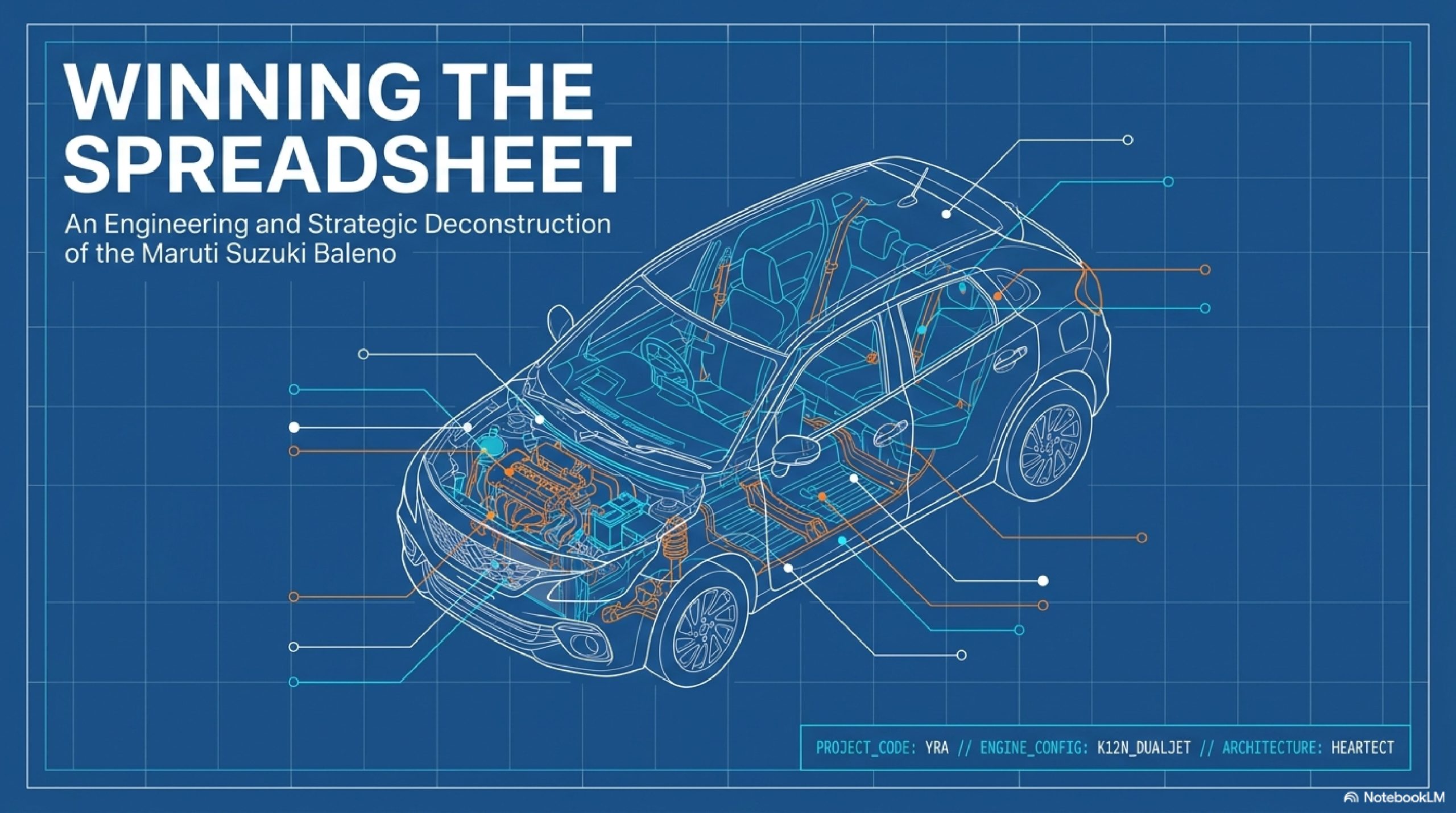
Introduction
In the hyper-competitive landscape of the Indian automotive market, launching a hatchback is easy, but sustaining market dominance is brutally difficult. The Indian consumer is notoriously unforgiving demanding the interior space of a sedan, the fuel efficiency of a motorcycle, the feature list of a luxury car, and a maintenance cost that barely registers on a monthly budget.
Yet, month after month, year after year, the Maruti Suzuki Baleno sits at the apex of the premium hatchback sales charts.
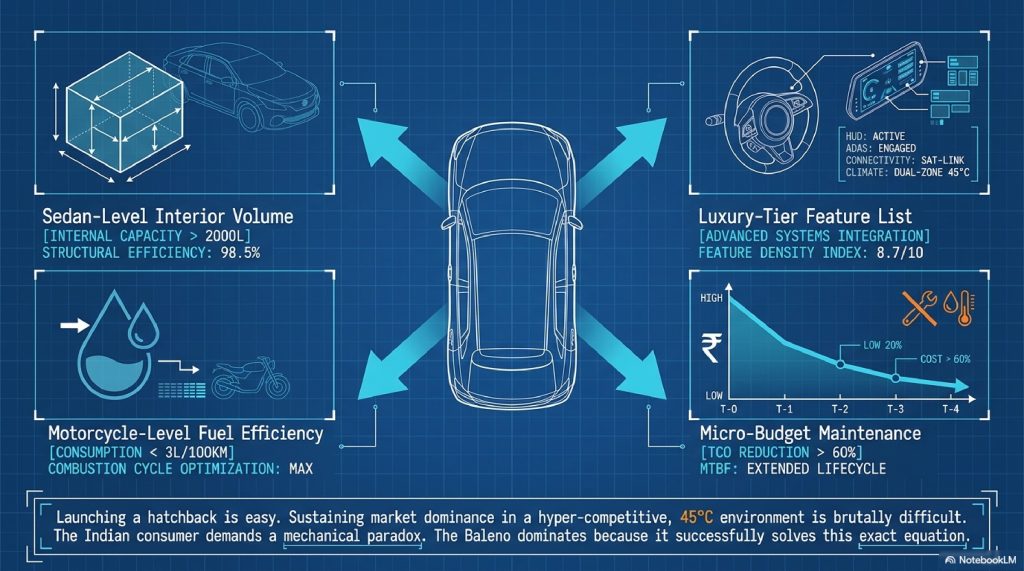
Is it simply brand loyalty, or is there a mechanical foundation to this dominance? To answer this, we must look past the 9-inch HD displays and the 360-degree cameras. We must examine the volumetric efficiency of its powertrain, the geometry of its suspension, and the thermal management systems designed to survive the relentless 45°C (113°F) Indian summers. Here is the complete engineering and ownership breakdown of why the Maruti Suzuki Baleno is India’s favourite hatchback.
Technical Explanation
The beating heart of the modern Baleno is the 1.2-litre, four-cylinder K12N DualJet, Dual VVT petrol engine. This naturally aspirated engine is a masterpiece of budget-conscious, high-efficiency engineering.
The Physics of the K12N DualJet
Most standard multi-point injection engines use a single fuel injector per cylinder. The K12N uses two injectors per cylinder (DualJet). By positioning two smaller injectors closer to the intake valves, the engine achieves a significantly finer atomization of the fuel spray.
- The Thermodynamic Benefit: Finer fuel droplets vaporize faster and mix more uniformly with incoming air. This creates a highly stable, rapid combustion flame front, drastically increasing the engine’s thermal efficiency and power density (producing 88.5 bhp and 113 Nm of torque).

Compression and Heat Management
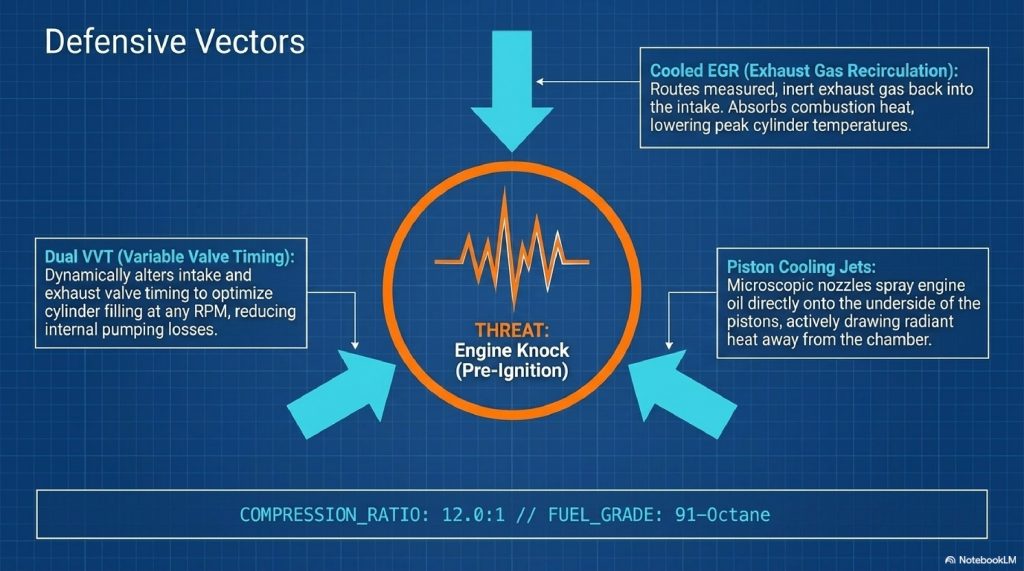
To extract maximum energy from the fuel, the K12N runs an incredibly high compression ratio of 12.0:1. Normally, compressing standard 91-octane Indian fuel this tightly would cause catastrophic engine knock (pre-ignition). Suzuki engineers solved this using three mechanical interventions:
- Cooled EGR (Exhaust Gas Recirculation): Routes a measured amount of inert exhaust gas back into the intake, absorbing combustion heat and lowering peak cylinder temperatures.
- Piston Cooling Jets: Microscopic nozzles spray engine oil directly onto the underside of the pistons, drawing radiant heat away from the combustion chamber.
- Dual VVT (Variable Valve Timing): Dynamically alters the opening and closing of both the intake and exhaust valves to optimize cylinder filling at any RPM, reducing pumping losses.
The Idle Start-Stop (ISS) System
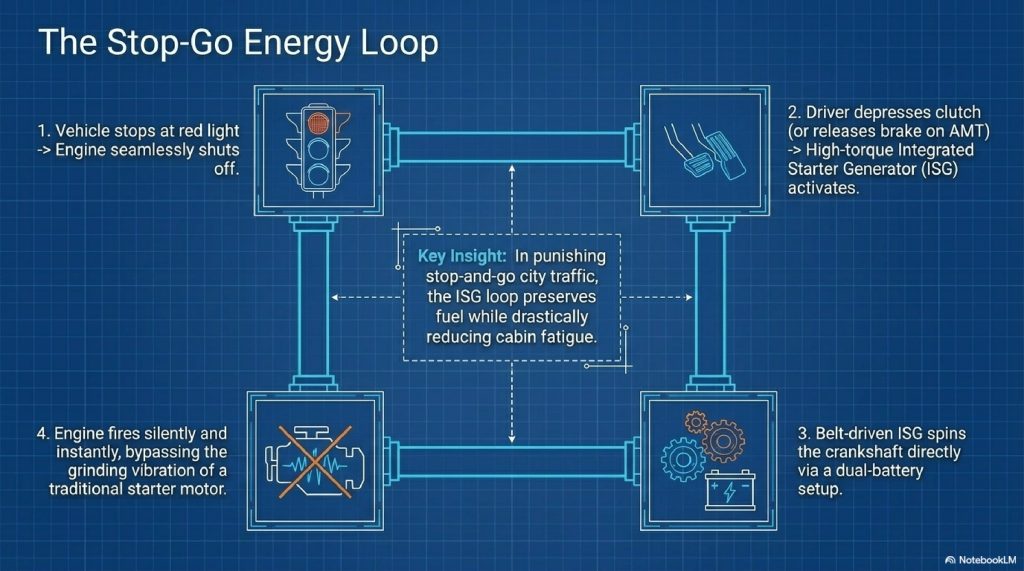
The Baleno integrates a belt-driven Integrated Starter Generator (ISG) coupled with a dual-battery setup. When you stop at a red light, the engine shuts off. The moment you depress the clutch (or release the brake on the AMT), the high-torque ISG spins the crankshaft and fires the engine silently and instantly, completely eliminating the vibration associated with traditional starter motors.
Real-World Performance
Engineering theory is useless if it fails on the asphalt. The Baleno translates its spec sheet into highly tangible real-world benefits.
Fuel Economy: The Ultimate Metric
Due to the thermal efficiency of the K12N engine and the lightweight Heartect platform (kerb weight ~960 kg), the Baleno delivers staggering ARAI-certified mileage: 22.35 kmpl (Manual) and 22.94 kmpl (AMT). In punishing stop-and-go city traffic, owners consistently report real-world figures between 16 and 18 kmpl. The factory S-CNG variant pushes this even further, offering upwards of 30.61 km/kg.
Heat Management and AC Performance
Indian summers are a stress test for any cooling system. The Baleno’s oversized radiator and optimized AC compressor are mapped to prioritize cabin cooling without heavily sapping engine torque. Rear AC vents ensure the 318-litre cabin volume drops in temperature rapidly, a crucial factor for rear-seat comfort in tropical climates.
Suspension and Ride Quality
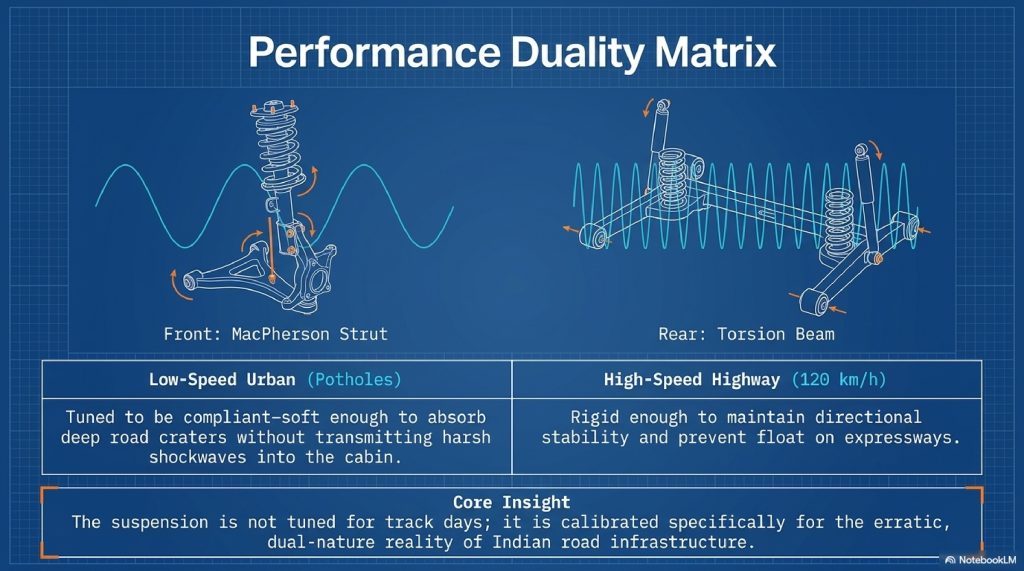
The Baleno utilizes a MacPherson strut front suspension and a torsion beam rear. Suzuki optimized the damping rates specifically for Indian road conditions. It is tuned to be “compliant” soft enough to absorb deep potholes without sending shockwaves into the cabin, yet rigid enough to remain stable at 120 km/h on expressways.
Common Problems
No mass-market vehicle is flawless. The Baleno has specific engineering quirks that owners must understand.
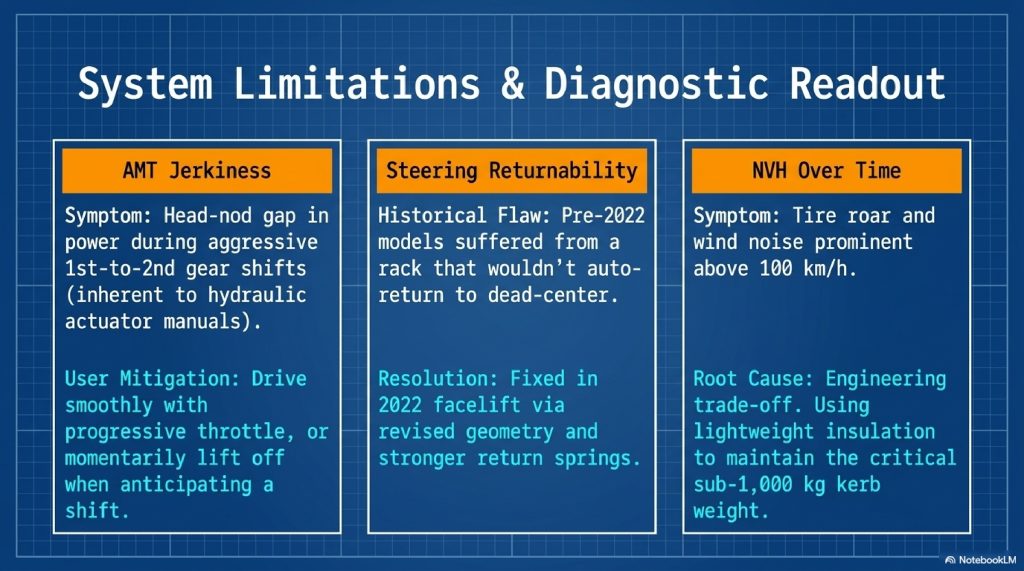
- AMT Jerkiness (Symptom): The Automated Manual Transmission (AMT) is essentially a manual gearbox shifted by hydraulic actuators. During aggressive acceleration, the gap in power delivery during the 1st-to-2nd gear shift causes a noticeable “head-nod” or jerk.
- User Prevention: Drive the AMT smoothly with progressive throttle inputs, or momentarily lift off the accelerator when you anticipate a shift.
- Steering Returnability (Historical Flaw): Early models (pre-2022) suffered from a steering rack that refused to return to dead-center automatically after a tight turn. Suzuki addressed this in the facelift with revised steering geometry and a stronger return spring.
- NVH Over Time: While the K12N is refined, the lightweight insulation materials used to keep the car’s weight under 1,000 kg mean that tire roar and wind noise become prominent above 100 km/h.
Servicing & Maintenance
The foundation of Maruti Suzuki’s brand identity is low-cost, predictable maintenance. The Baleno adheres to this philosophy rigidly.
1. Maintenance Intervals
Routine service is mandated every 10,000 kilometres or 12 months. The basic service (oil, filters, fluid top-ups) typically costs between ₹4,500 and ₹6,000, making it one of the cheapest premium hatchbacks to maintain globally.
2. Oil Recommendations
The K12N engine’s tight tolerances demand ultra-thin, friction-reducing oil. You must use 0W-16 or 0W-20 Full Synthetic Oil. Pouring thicker older-generation oils (like 10W-40) into this engine will restrict flow to the variable valve timing (VVT) actuators and drastically reduce fuel economy.
3. Cooling System Maintenance
Given the high 12.0:1 compression ratio, cooling system health is paramount. Ensure the coolant is flushed every 40,000 km using Maruti’s proprietary Long Life Coolant. Never top up the radiator with hard tap water; the calcium deposits will immediately scale the micro-channels of the aluminum radiator.

Comparison Section
How does the Baleno stack up against its fierce rivals?
| Feature | Maruti Suzuki Baleno | Hyundai i20 | Tata Altroz |
| Engine Philosophy | High Efficiency DualJet | Refined 1.2L Kappa / Turbo | Sturdy 1.2L Revotron |
| Transmission | 5-Speed MT / AMT | MT / IVT / DCT | MT / DCA |
| Fuel Economy | Class Leading (22.94 kmpl) | Average (19.6 kmpl) | Good (19.3 kmpl) |
| Ride Quality | Soft, compliant. | Balanced, sporty. | Firm, stable at high speeds. |
| Safety Rating | Improved (Up to 6 airbags) | Average | 5-Star Global NCAP |
| Ownership Cost | Extremely Low | Moderate | Moderate to High |
The Verdict: The Hyundai i20 feels slightly more premium inside, and the Tata Altroz boasts superior chassis rigidity and safety ratings. However, the Baleno strikes an unbeatable mathematical balance: it offers 90% of the premium feel, class-leading fuel efficiency, and a maintenance network that stretches into the deepest rural corners of India.
Future Technology
As the automotive industry shifts, the Baleno platform is evolving to stay relevant over the next decade.
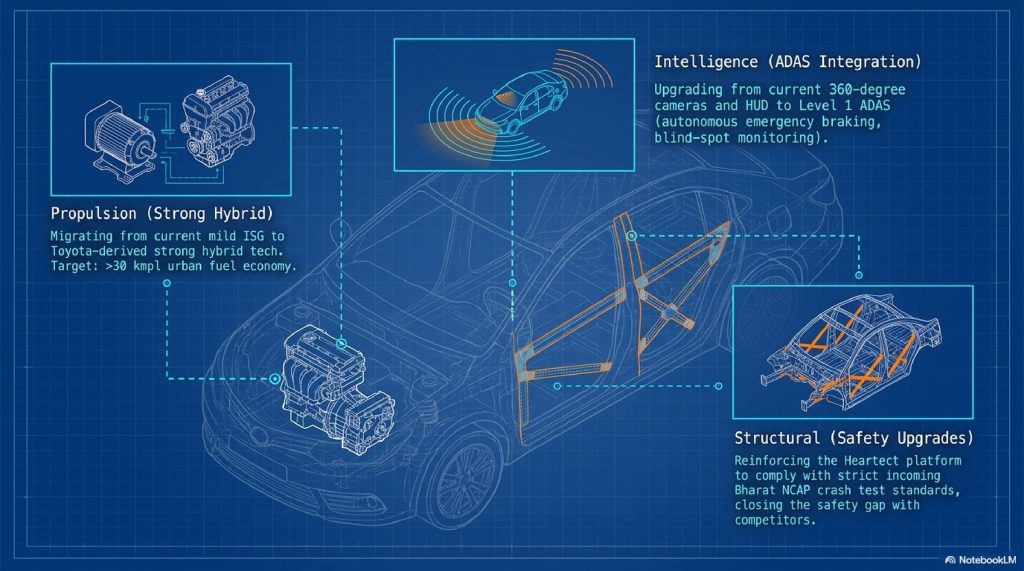
- Strong Hybrid Integration: While the current ISG is a “mild hybrid,” future iterations of Suzuki’s premium hatchbacks are expected to utilize Toyota-derived strong hybrid technology, potentially pushing urban fuel economy past 30 kmpl.
- ADAS Integration: Currently offering 360-degree cameras and Head-Up Displays (HUD), the next generational leap will likely introduce Level 1 ADAS (Advanced Driver Assistance Systems) like autonomous emergency braking and blind-spot monitoring.
- Safety Upgrades: Suzuki is reinforcing the Heartect platform to comply with stricter Bharat NCAP crash test standards, aiming to close the safety gap with its Tata competitors.
Historical Background
The Baleno nameplate was initially introduced in 1999 as a premium sedan, but it struggled to find its footing against the Honda City. Maruti wisely resurrected the name in 2015 for an all-new premium hatchback project to launch its upscale NEXA dealership network.
It was a masterstroke. By abandoning the conservative styling of the Swift and opting for a wider, “liquid flow” design language, the Baleno targeted the aspiring middle class. Over the last decade, it has undergone significant structural and technological facelifts most notably the 2022 overhaul that introduced a new suspension, 6 airbags, and a completely redesigned dashboard cementing its position as a segment leader.

Expert Insights
From an automotive engineering perspective, the Baleno is not designed to win track days; it is designed to win spreadsheets.
Durability Analysis: The K-Series engines are legendary for their longevity. It is exceptionally common to see well-maintained Balenos cross the 200,000 km mark with original engine internals. The wear items are typically limited to suspension bushings and clutch plates (especially in heavy city traffic).
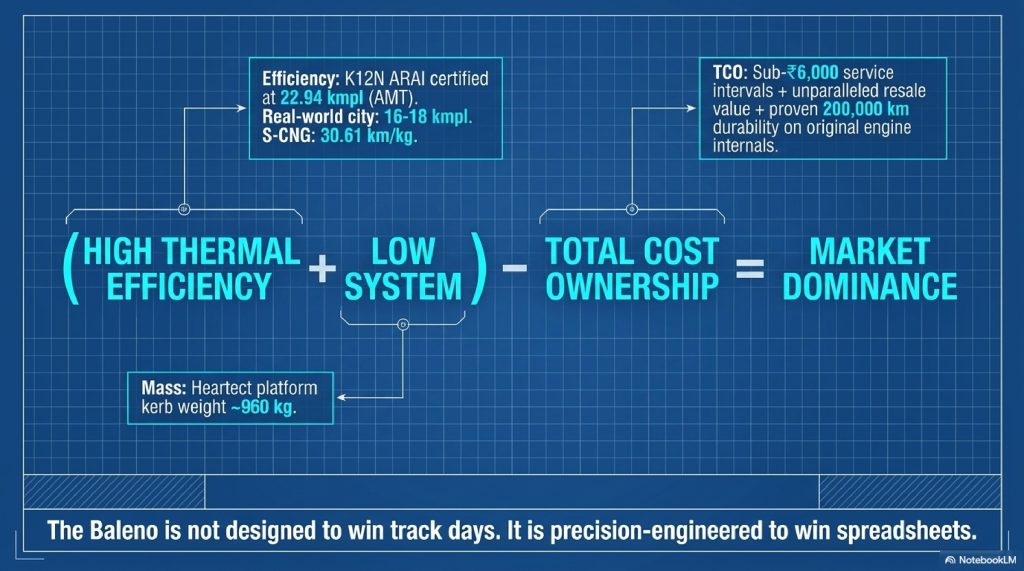
Total Cost of Ownership (TCO): If you factor in the initial purchase price, the unparalleled fuel economy, the cheap spare parts, and the incredibly high resale value, the TCO of a Baleno over a 5-year period is mathematically unbeatable in the Indian market.
Conclusion
The Maruti Suzuki Baleno is India’s favourite hatchback because it is a flawless reflection of the Indian consumer’s psyche. It leverages world-class thermal engineering (via the K12N DualJet engine) to deliver unbeatable fuel efficiency, provides a cabin large enough for a family of five, and wraps it in a maintenance ecosystem that is reliable and cheap.
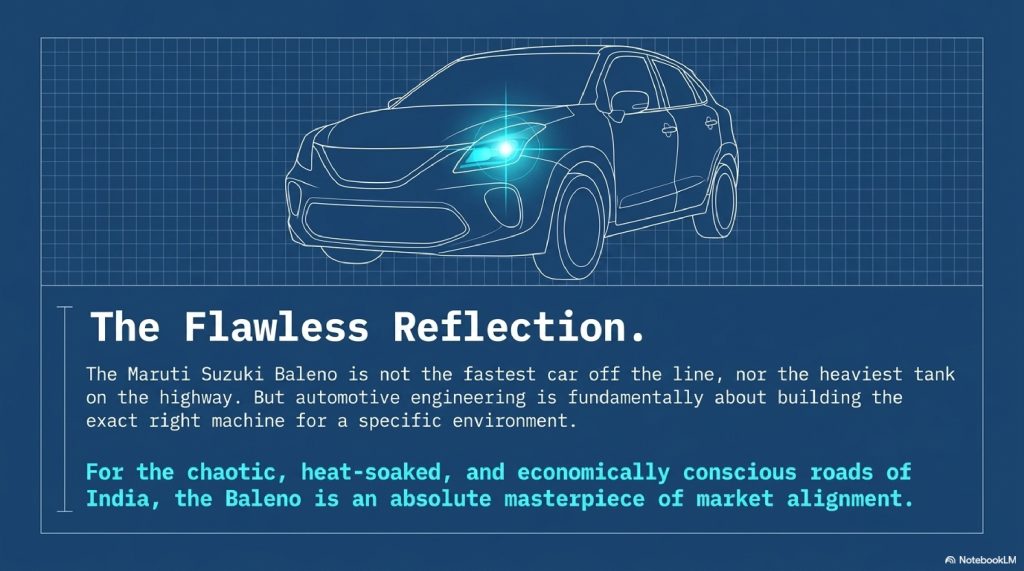
It may not be the fastest car off the line, nor the heaviest tank on the highway. But automotive engineering is about building the right machine for the right environment. For the chaotic, heat-soaked, and economically conscious roads of India, the Baleno is an absolute masterpiece of market alignment.
Keep Learning:
- The Engineering Behind Twin Turbo Systems: Parallel vs. Sequential
- The Best Engine Oils for Turbocharged Engines (API SP & LSPI Guide)
- How Diesel to CNG Conversion Works (And Saves Money)
- Engine Knocking in Modern Cars: Causes, Fixes & Engineering
Frequently Asked Questions (FAQ)
Q: Is the Baleno AMT better than a manual transmission?
A: It depends on your commute. If you spend 80% of your time in bumper-to-bumper city traffic, the AMT eliminates clutch fatigue and actually matches the manual in fuel economy. However, if you enjoy spirited highway driving, the 5-speed manual offers superior control and eliminates the AMT’s slow shift times.
Q: Does the Baleno feel unstable at high speeds because of its light weight?
A: The Heartect platform uses ultra-high-tensile steel to maintain structural rigidity while shedding weight. While older models felt slightly floaty above 100 km/h, the modern 2026 iteration features a retuned suspension and thicker anti-roll bars that provide much greater high-speed confidence.
Q: Why does the engine shut off automatically at traffic lights?
A: That is the Idle Start-Stop (ISS) system at work. It shuts the engine down to prevent burning fuel while idling. The integrated dual-battery setup runs your electronics, and the ISG motor restarts the engine silently the moment you engage the clutch or release the brake.
Q: How does the CNG variant compare to the petrol version in terms of power?
A: The Baleno S-CNG produces roughly 77.5 bhp compared to the petrol’s 88.5 bhp. You will notice a slight drop in acceleration when passing on the highway, but the staggering 30.61 km/kg fuel efficiency makes it a highly sensible trade-off for high-mileage commuters.
[Affiliate Integration: Protect Your Paint]
Product Name: Meguiar’s Hybrid Ceramic Liquid Wax
Why it is useful: The intense UV rays of the Indian sun will degrade a car’s clear coat within years. Ceramic wax provides a heat-resistant, hydrophobic barrier that keeps the Baleno’s Nexa Blue paint looking factory-fresh.
Best use case: Applying every 6 months to protect against UV damage, bird droppings, and monsoon acid rain.
Click Here to Shop: [Protect your car’s paint – Shop Meguiar’s on Amazon]
[Affiliate Integration: Elevate Your Interior]
Product Name: 70mai Smart Dash Cam 1S
Why it is useful: Indian traffic is chaotic and unpredictable. A reliable dash cam protects you against insurance fraud and records critical evidence during accidents.
Best use case: Essential daily-driving hardware for urban environments.
Click Here to Shop: [Secure your daily commute – Buy the 70mai Dash Cam on Amazon]
[Affiliate Integration: Diagnostic Independence]
Product Name: BlueDriver Bluetooth Pro OBDII Scan Tool
Why it is useful: The Baleno is packed with sensors. If a Check Engine Light appears, this tool allows you to read the exact fault code on your smartphone, preventing you from being overcharged at local garages.
Best use case: Diagnosing O2 sensor faults, monitoring battery health, and checking live fuel trims.
Click Here to Shop: [Stop guessing, start diagnosing – Shop BlueDriver on Amazon]