Introduction
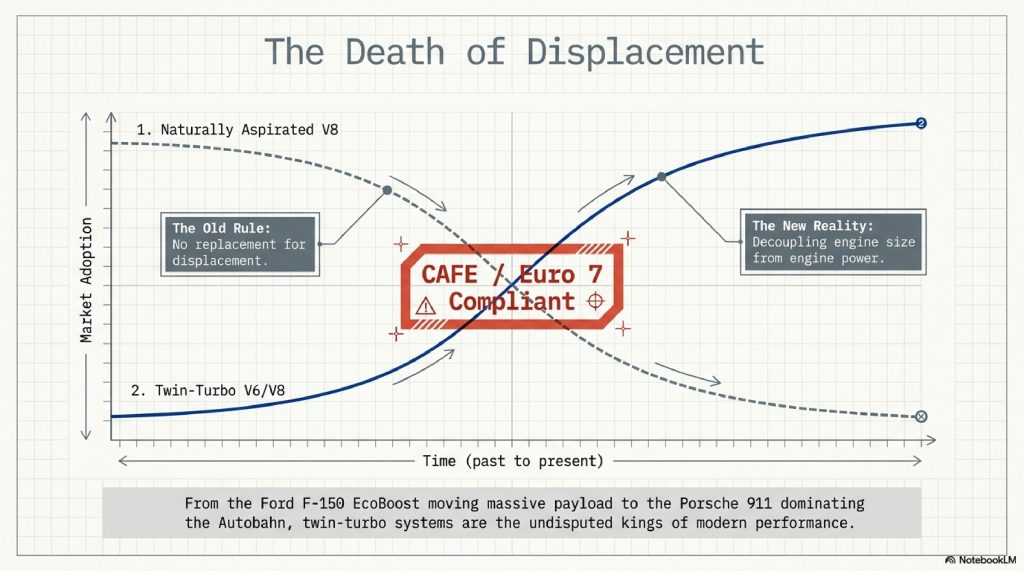
For decades, the automotive formula for power was brutally simple: there is no replacement for displacement. If you wanted a vehicle to go faster or tow heavier loads, you built a larger engine with more cylinders.
Today, that philosophy is functionally dead. As global emissions standards like Euro 7 and CAFE regulations force automakers to shrink engine displacements, the naturally aspirated V8 is being rapidly replaced by the Twin-Turbocharged V6 and V8. From the Ford F-150 EcoBoost moving heavy payload across American highways to the Porsche 911 devouring the German Autobahn, twin-turbo systems are the undisputed kings of modern performance.
But strapping two air compressors to an engine introduces a labyrinth of thermal dynamics, fluid mechanics, and plumbing complexity. For the modern car owner or enthusiast, understanding how these systems generate power and how they fail is the difference between enjoying a 200,000-mile powerhouse and paying for a catastrophic engine rebuild.
Technical Explanation
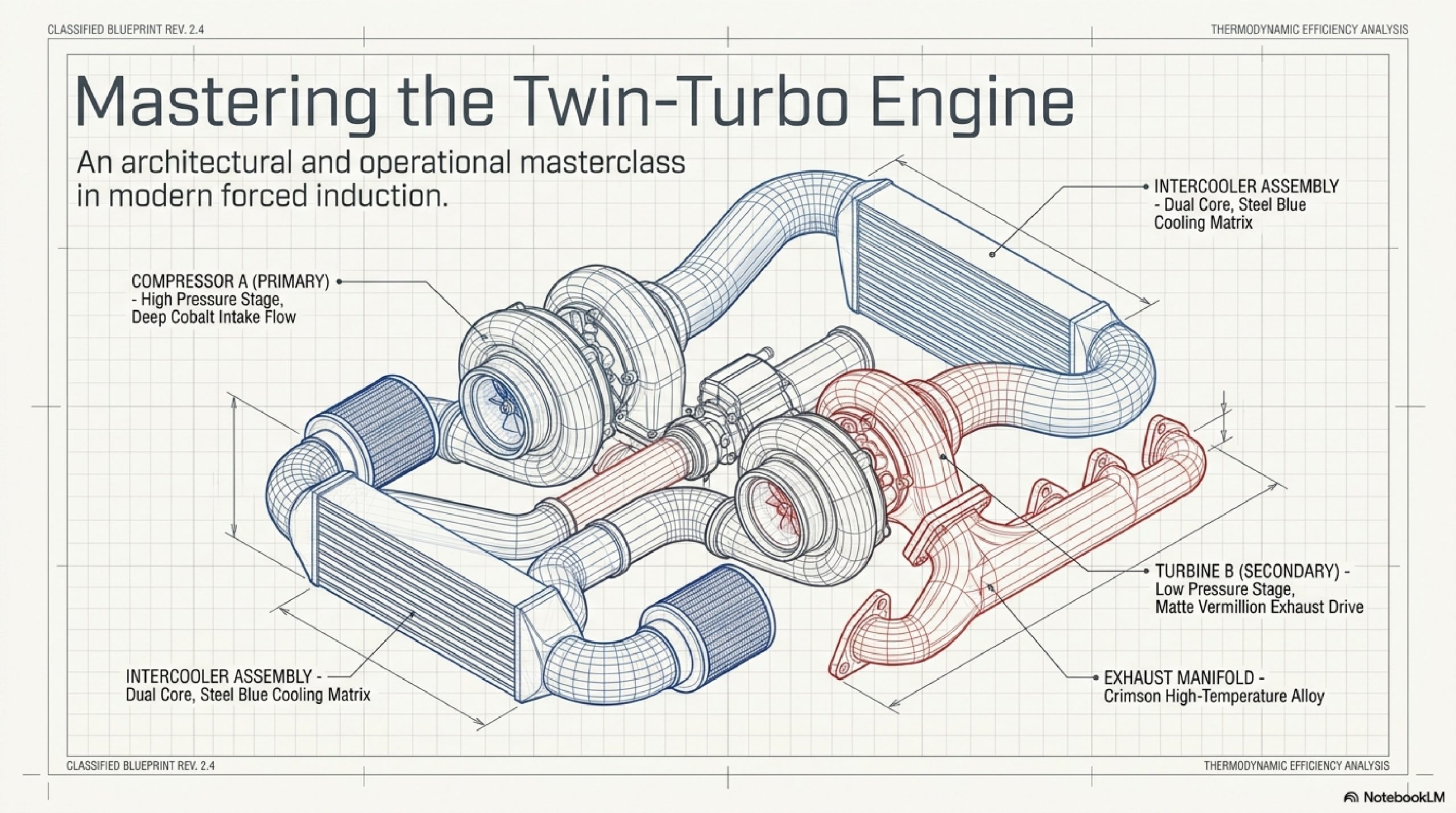
At its core, a turbocharger is an air pump driven by exhaust gases. It forces highly compressed, dense air into the combustion chamber, increasing the engine’s volumetric efficiency. However, a single large turbocharger suffers from “turbo lag”, it takes time for the exhaust gases to spin the massive turbine wheel.
To solve this, engineers use two turbochargers. There are two primary mechanical layouts for twin-turbo systems:
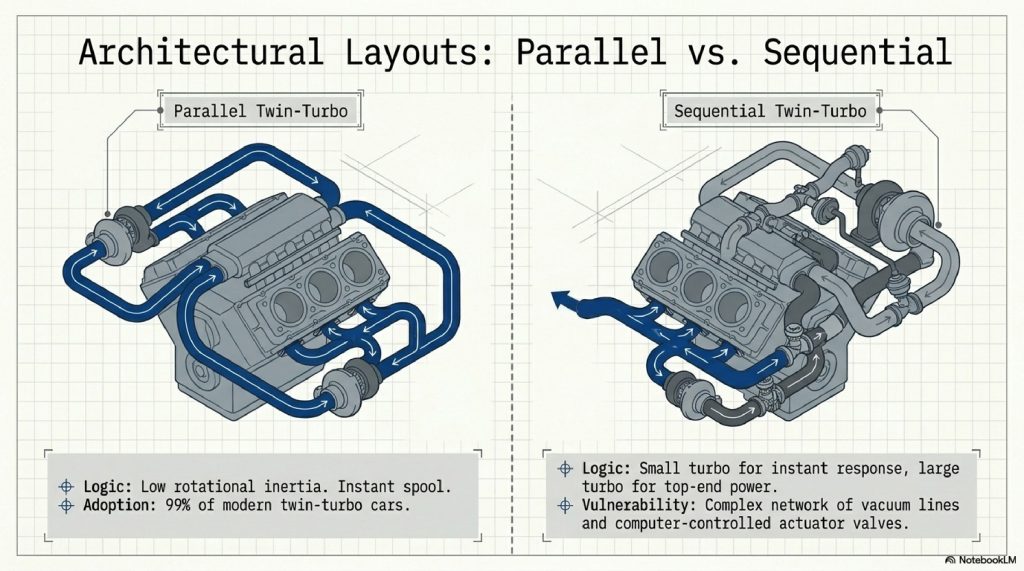
1. Parallel Twin-Turbo Systems
- How it works: Two equally sized turbochargers are used. On a V6 or V8 engine, one turbocharger is assigned to each cylinder bank (e.g., three cylinders feed the left turbo, three cylinders feed the right turbo).
- The Engineering Logic: Because each turbo is small, it has very low rotational inertia. The exhaust gases can spool the turbine wheels almost instantly, entirely eliminating turbo lag. Both turbos compress air and feed it into a shared intake manifold. This is the standard for 99% of modern twin-turbo cars.
2. Sequential Twin-Turbo Systems
- How it works: Two differently sized turbos (or two identically sized turbos operated in sequence) are used. Exhaust gas is routed to a small “primary” turbo at low RPMs for instant response. As RPMs and exhaust volume increase, a complex network of computer-controlled exhaust valves opens, redirecting the massive airflow to a larger “secondary” turbo to produce top-end horsepower.
- The Engineering Logic: It provides the best of both worlds instant low-end torque and massive high-end horsepower. However, the sheer complexity of the vacuum lines and actuator valves makes them a nightmare to manufacture and maintain.
Real-World Performance
The shift to twin turbos drastically alters how a vehicle behaves on the asphalt.
- The Flattened Torque Curve: A naturally aspirated engine builds torque linearly, peaking high in the RPM range. A modern parallel twin-turbo engine reaches peak torque as low as 1,500 RPM and holds it flat until 5,500 RPM. This makes heavy trucks feel light and sports cars feel violently fast off the line.
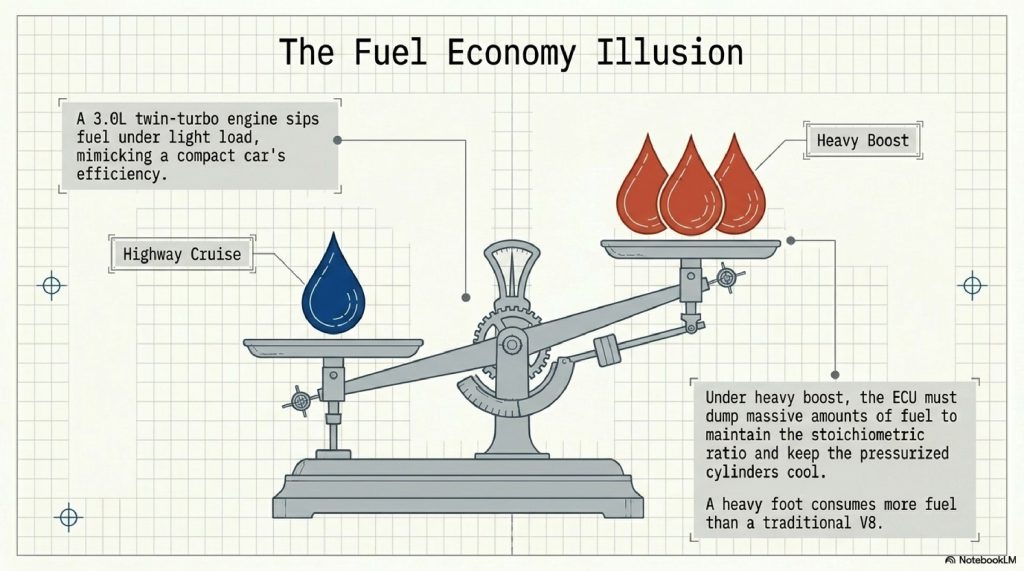
- Fuel Economy Illusion: Twin turbos allow a 3.0L engine to cruise on the highway sipping fuel like a compact car. However, under heavy boost, the ECU must inject massive amounts of fuel to maintain the stoichiometric ratio and keep the cylinders cool. If you have a “heavy foot,” a twin-turbo V6 will consume more fuel than an older V8.
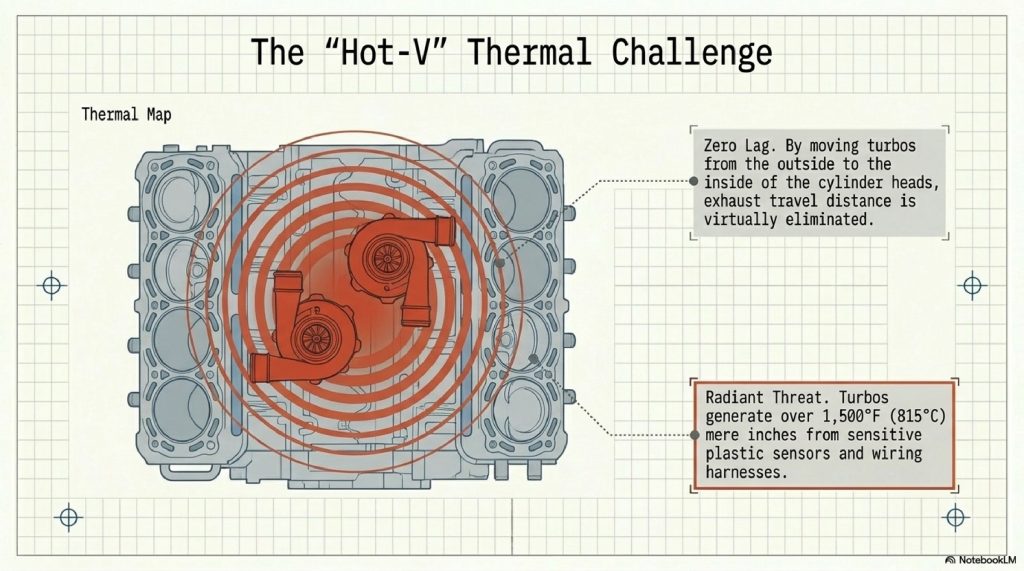
- The “Hot-V” Thermal Challenge: To further reduce lag, modern German engineers (Mercedes-AMG, BMW, Porsche) moved the twin turbos from the outside of the engine to the inside of the “V” between the cylinder heads. This creates a thermal nightmare, as the turbos generate over 1,500°F (815°C) of radiant heat mere inches from sensitive plastic sensors and wiring harnesses.
Common Problems
Multiplying the turbochargers multiplies the potential failure points.
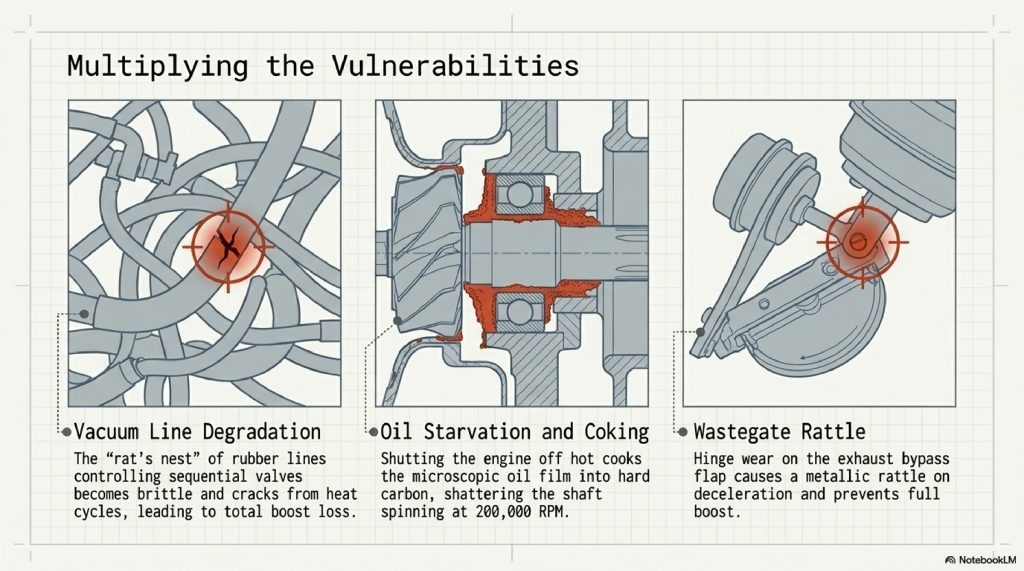
- Vacuum Line Degradation (Sequential Systems): Famous on the 1990s Mazda RX-7 and Toyota Supra, the “rat’s nest” of rubber vacuum lines controlling the sequential valves becomes brittle and cracks from heat cycles, leading to total boost loss.
- Oil Starvation and Coking: Turbos spin at up to 200,000 RPM on a microscopic film of engine oil. If the engine is shut off immediately after hard driving, the oil inside the scorching hot turbo bearings cooks into hard carbon (coking), eventually starving the turbo of lubrication and shattering the shaft.
- Wastegate Rattle: The internal flap that bypasses exhaust gas around the turbine (the wastegate) can wear out at the hinge. This creates a metallic rattling sound on deceleration and prevents the turbo from building full boost.
Servicing & Maintenance
Owning a twin-turbo engine requires strict adherence to maintenance protocols that naturally aspirated owners can often ignore.
1. Aggressive Oil Changes
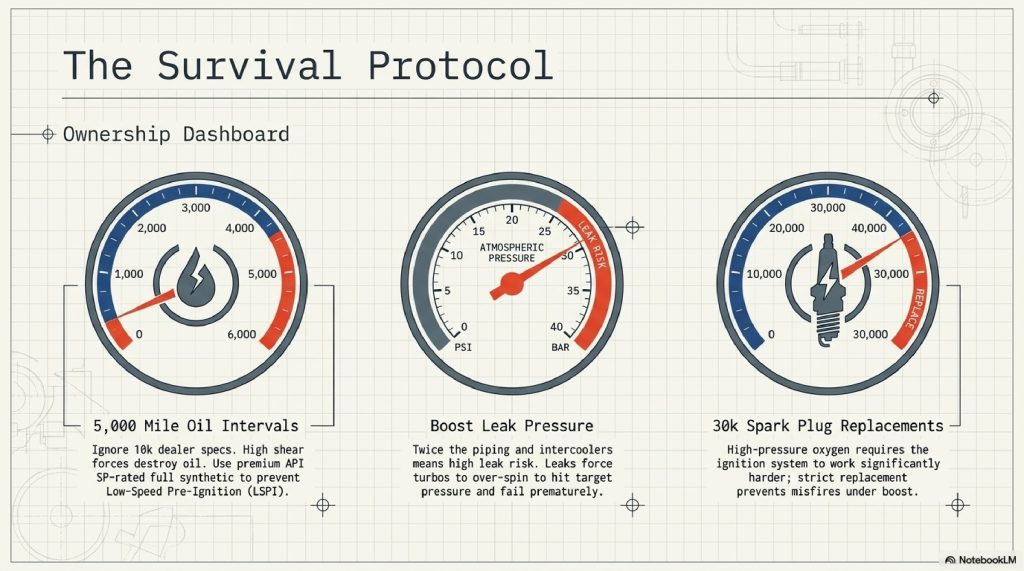
Ignore the dealership’s 10,000-mile oil change intervals. The shear forces inside twin turbochargers destroy engine oil rapidly. Change your oil every 5,000 miles (8,000 km) using a premium API SP-rated full synthetic oil to prevent Low-Speed Pre-Ignition (LSPI).
2. Boost Leak Testing
With twice the piping, intercoolers, and couplers, boost leaks are incredibly common. A boost leak forces the turbos to over-spin to hit their target pressure, leading to premature failure.
3. Spark Plug Intervals
Because twin turbos cram more oxygen into the cylinder, the ignition system must work significantly harder to spark under high pressure. Spark plugs in twin-turbo engines often require replacement every 30,000 to 40,000 miles to prevent misfires.
Comparison Section
How does a twin-turbo setup compare to other forced induction layouts?
| Feature | Parallel Twin Turbo | Big Single Turbo | Twin-Scroll Single Turbo |
| Turbo Lag | Almost zero. | Very high (Requires high RPM). | Low (Divides exhaust pulses). |
| Top-End Power | Excellent. | Maximum potential. | Good, but chokes at high RPM. |
| Plumbing Complexity | Very High (Two of everything). | Low. | Medium. |
| Cost to Repair | Very Expensive. | Moderate. | Moderate. |
| Ideal Application | V6 and V8 engines, luxury/towing. | Drag racing, huge horsepower. | Inline-4 and Inline-6 engines. |
Note: For Inline-4 and Inline-6 engines, engineers now heavily favor a single Twin-Scroll turbocharger over twin turbos. It provides nearly the same lag reduction but cuts the weight and manufacturing complexity in half.
Future Technology
As electrification takes over, the mechanical twin-turbo system is evolving into a hybrid architecture.
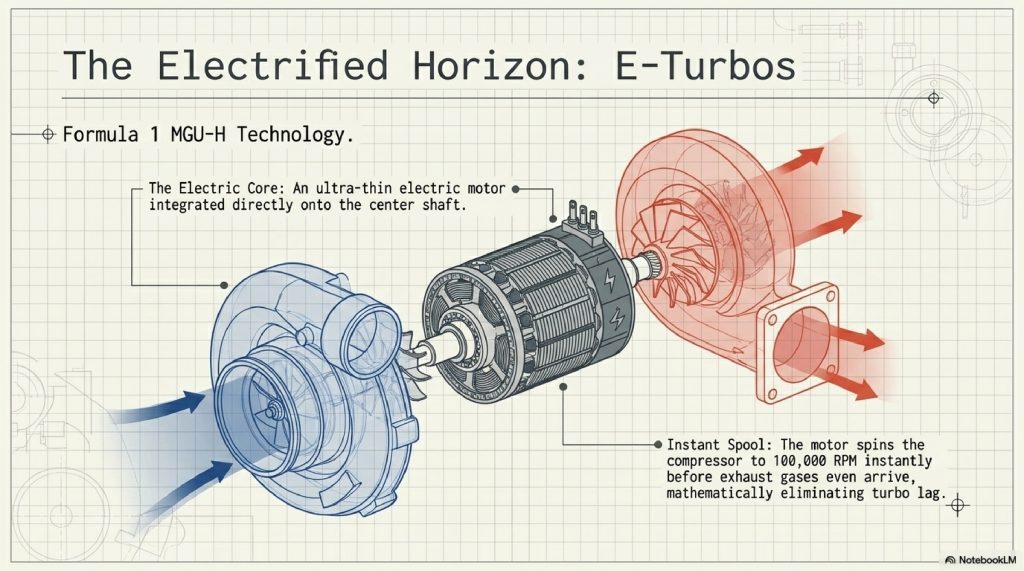
- Electric Turbos (e-Turbos): Derived from Formula 1’s MGU-H technology, companies like Mercedes-AMG are integrating a thin electric motor directly onto the turbocharger shaft. The electric motor spins the turbo to 100,000 RPM instantly before the exhaust gases even arrive, mathematically eliminating turbo lag.
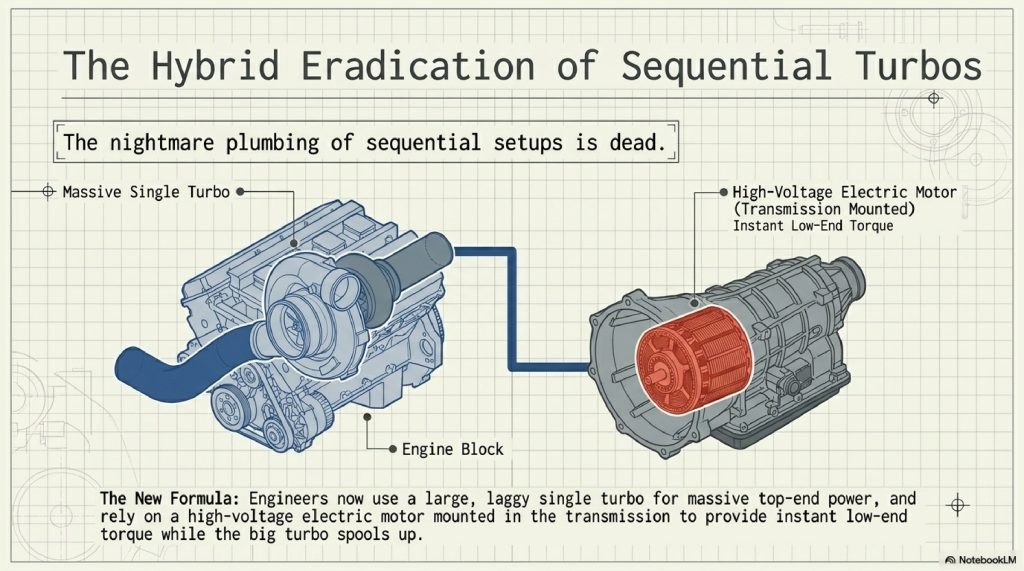
- The Hybrid Eradication of Sequential Turbos: The nightmare plumbing of sequential twin-turbos is dead. Today, engineers use a large, laggy single turbo for top-end power, and use a high-voltage electric motor mounted in the transmission to provide instant torque while the big turbo spools up.
Historical Background
The pursuit of twin-turbo dominance began in 1981 with the Maserati Biturbo, the first production car to use two turbochargers. However, it was plagued by catastrophic reliability issues.
The golden era of twin turbos arrived in the 1990s from Japan and Germany. The Porsche 959 proved that sequential turbos could conquer the world, a torch carried flawlessly by the Toyota Supra (2JZ-GTE), Mazda RX-7 (FD3S), and Nissan Skyline GT-R (RB26DETT). These engines achieved mythological status, proving that small-displacement engines with two turbos could humiliate naturally aspirated V12 supercars.
Expert Insights
As an automotive engineer, the most profound shift I have observed in twin-turbo technology is not mechanical; it is computational.
In the 1990s, sequential twin turbos were notoriously unreliable because the engine computers (ECUs) were too slow to manage the intricate dance of vacuum valves, fuel trims, and ignition timing safely. Today, modern ECUs operate at lightning speed. They employ wideband oxygen sensors and individual cylinder knock sensors that adapt to pressure changes in milliseconds.
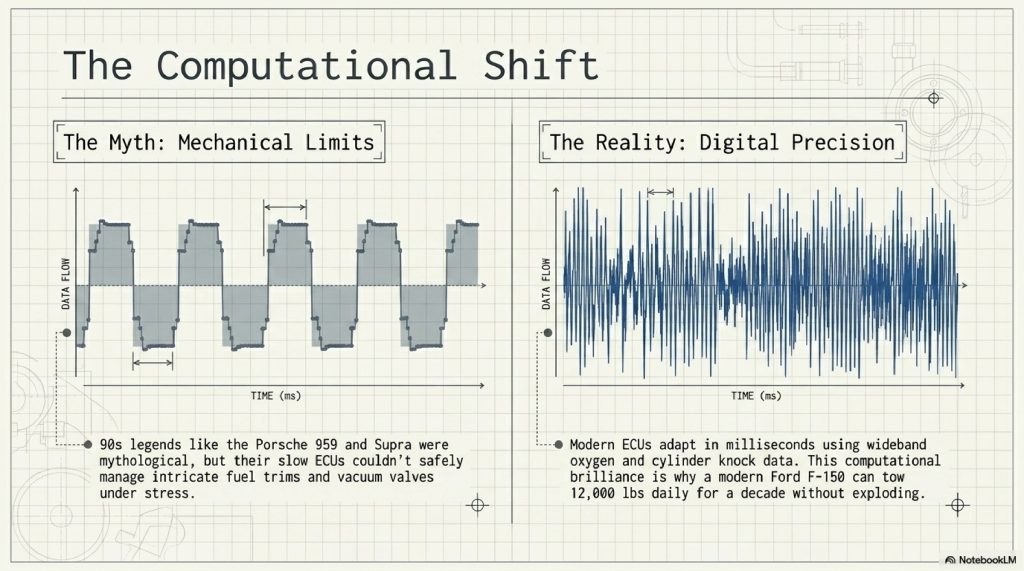
This computational brilliance is why a modern Ford F-150 can utilize a twin-turbo setup to tow 12,000 pounds daily for a decade without exploding a feat that would have been engineering fiction twenty years ago.
Conclusion
The twin-turbo system represents the pinnacle of internal combustion fluid dynamics. By harnessing the wasted thermal and kinetic energy of exhaust gases, engineers have successfully decoupled engine size from engine power.
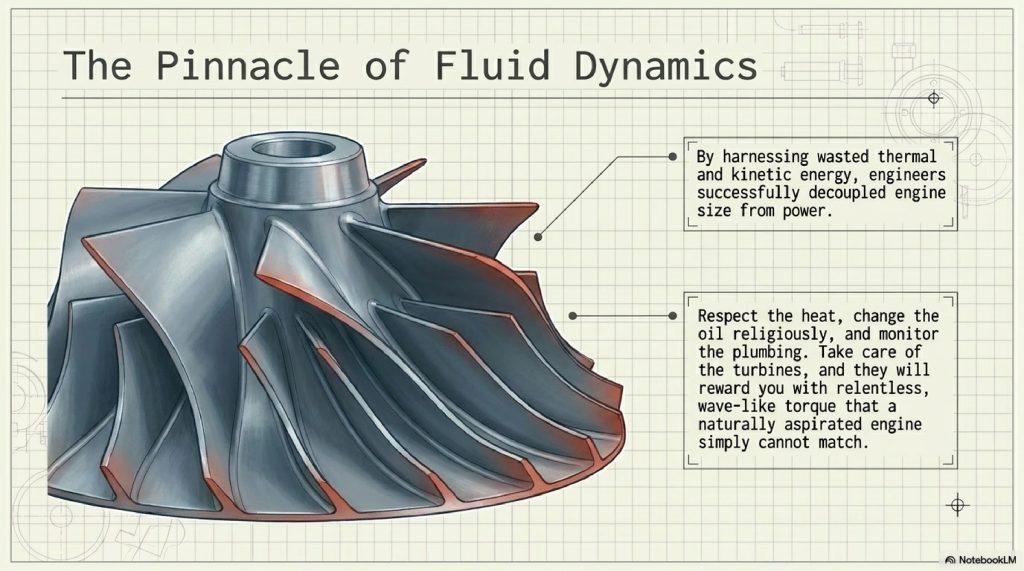
Whether you are driving a parallel setup tucked inside a “Hot-V” or maintaining a classic 90s sequential legend, the rules of ownership are the same: respect the heat, change the oil religiously, and monitor your boost plumbing. Take care of the turbines, and they will reward you with relentless, wave-like torque that a naturally aspirated engine simply cannot match.
Keep Learning:
- The Best Engine Oils for Turbocharged Engines (API SP & LSPI Guide)
- How Diesel to CNG Conversion Works (And Saves Money)
- Engine Knocking in Modern Cars: Causes, Fixes & Engineering
- How Intercoolers Improve Turbo Engine Performance (Engineering Guide)
- Stage 1 vs Stage 2 ECU Tuning Explained (An Engineer’s Guide)
Frequently Asked Questions (FAQ)
Q: Does a twin-turbo car have two blow-off valves?
A: It depends on the plumbing. Most modern parallel twin-turbo engines merge the compressed air into a single intake tract before the throttle body, requiring only one shared blow-off valve (or bypass valve).
Q: Are twin turbos worse for engine reliability than a single turbo?
A: Not inherently. While there are more moving parts that can fail, twin turbos are typically smaller and run at lower individual boost pressures to achieve their power targets, which can actually reduce the mechanical stress on each individual turbo.
Q: Can I convert my naturally aspirated V8 into a twin-turbo setup?
A: Yes, but it requires extreme mechanical modification. Beyond the custom exhaust manifolds and oil lines, you must upgrade the fuel injectors, fuel pump, and use a standalone ECU to manage the fuel and ignition timing. Without these, the engine will detonate and destroy itself.
Q: What is the difference between Twin Turbo and Bi-Turbo?
A: Nothing. “Bi-Turbo” is simply a marketing term, predominantly used by German manufacturers like Mercedes-Benz and Audi, to describe a parallel twin-turbo system. Mechanically, they are identical concepts.
Product Name: Mishimoto Universal Baffled Oil Catch Can
Why it is useful: Twin turbo engines generate massive crankcase pressure, forcing oil vapors into the intake tract. A catch can intercepts this oil before it coats your intercooler and degrades your fuel’s octane rating.
Best use case: Preventative maintenance to stop carbon buildup on GDI twin-turbo engines.
Click Here to Shop: [Protect your engine – Shop Mishimoto on Amazon]
Product Name: AutoLine Pro Automotive Smoke Machine & Boost Leak Tester
Why it is useful: It pumps harmless smoke into the intake system while the engine is off, instantly revealing microscopic tears in vacuum lines or loose intercooler couplers that are bleeding your horsepower.
Best use case: Diagnosing underboost codes (e.g., P0299) or sluggish acceleration.
Click Here to Shop: [Find your boost leaks easily – Buy on Amazon]
Product Name: BlueDriver Bluetooth Pro OBDII Scan Tool
Why it is useful: Twin turbo engines rely heavily on sensor data. This tool lets you view live data for Manifold Absolute Pressure (MAP), Intake Air Temperature (IAT), and wastegate duty cycles straight from your smartphone.
Best use case: Monitoring engine health and diagnosing check engine lights.
Click Here to Shop: [Check the BlueDriver Price on Amazon]
Comment