Why Modern Cars Burn Oil? Engineers Explain the Consumption Problem
Posted on
By Pranjal Netam
Introduction
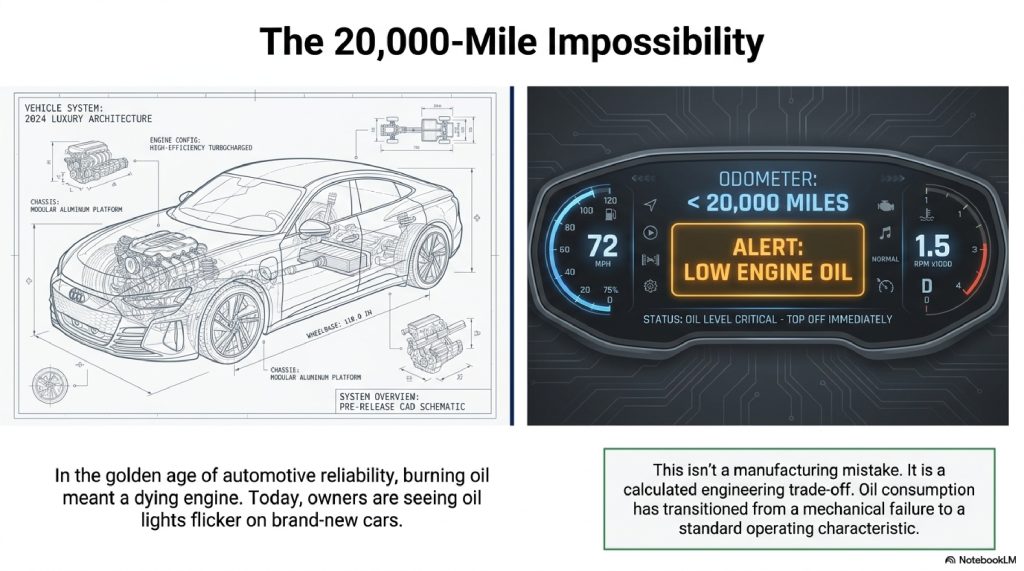
It is a scenario playing out in driveways from Los Angeles to London: A proud owner of a 2024 model-year vehicle, with less than 20,000 miles on the odometer, sees the dreaded “Low Engine Oil” light flicker to life. In the “golden age” of automotive reliability, this should be an impossibility. Yet, oil consumption has transitioned from a sign of a dying engine to a standard operating characteristic of a brand-new one.
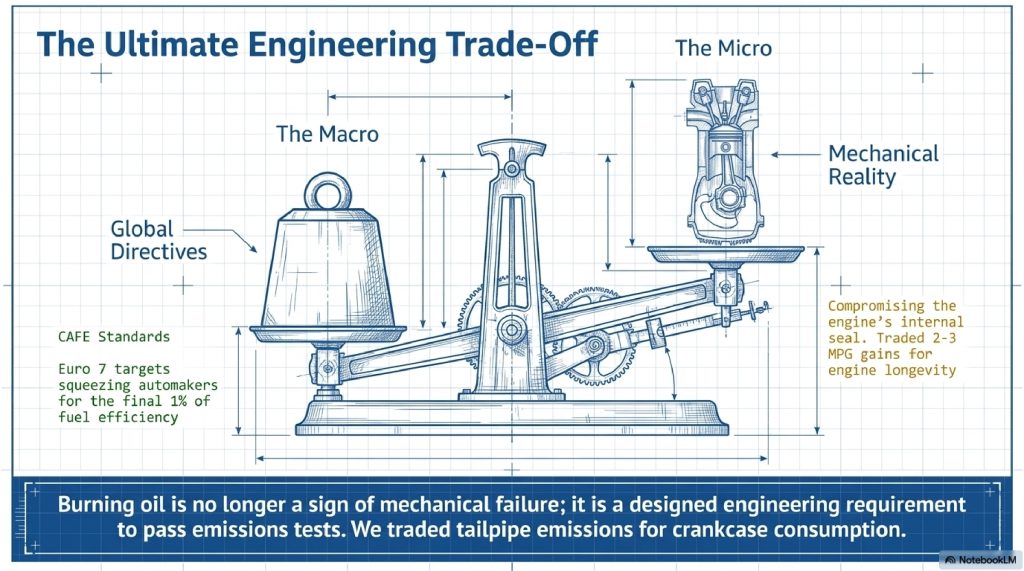
This isn’t a manufacturing mistake; it is a calculated engineering trade-off. As global emissions standards like CAFE (Corporate Average Fuel Economy) and Euro 7 tighten their grip, automakers are squeezed into a corner. To find the last 1% of fuel efficiency, they have compromised the most basic requirement of an internal combustion engine: its seal.
Why is your car burning oil? The answer lies at the intersection of microscopic friction reduction, high-pressure fuel systems, and the “marketing vs. engineering” war regarding maintenance intervals. Understanding this problem is the difference between a car that lasts 300,000 miles and one that requires a $10,000 engine replacement before the lease is even up.
Technical Explanation: The War on Friction
To understand oil consumption, we must look at the piston ring. Historically, piston rings were high-tension components. They pressed firmly against the cylinder walls, acting like a squeegee to keep oil in the crankcase and combustion gases in the cylinder.
1. The Low-Tension Piston Ring
In the quest for efficiency, engineers identified “parasitic drag” as the enemy. A significant portion of an engine’s internal energy is lost simply by the pistons sliding against the walls. To fix this, manufacturers moved to low-tension piston rings.
While these rings reduce friction and boost MPG, they possess less mechanical “clamping force.” Under certain conditions such as high vacuum or low-load cruising, the seal is imperfect. Microscopic amounts of oil bypass the ring and enter the combustion chamber, where they are burned off during the power stroke.
2. The Thinner Oil Dilemma (0W-8 and Beyond)
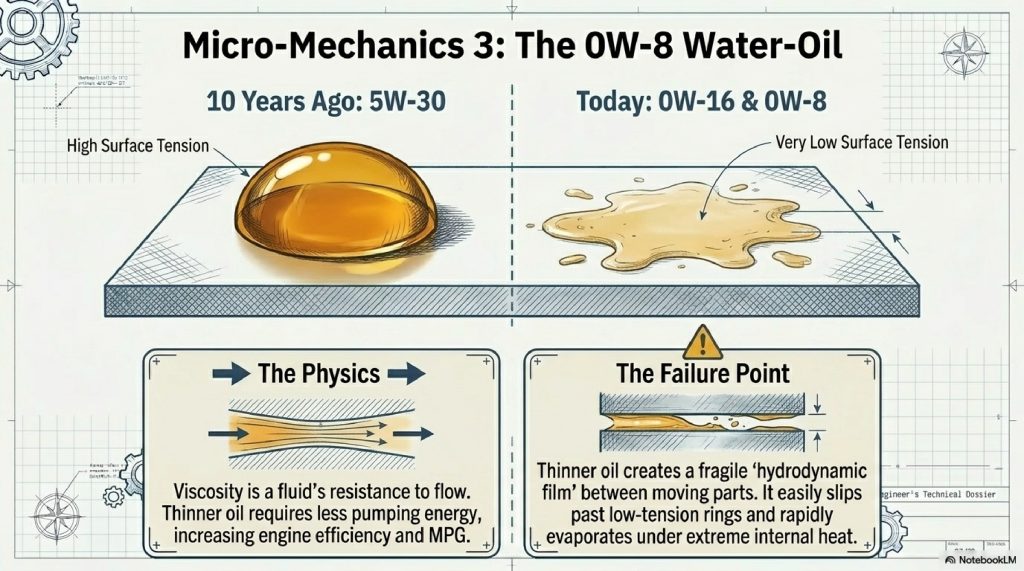
Viscosity is the measure of a fluid’s resistance to flow. Ten years ago, 5W-30 was the standard. Today, we see 0W-16 and even 0W-8 oils that have the consistency of water.
Mechanical Reasoning: Thinner oil requires less energy to pump, increasing efficiency.
The Failure Point: Thinner oil creates a thinner “hydrodynamic film” between moving parts. It is easier for this water-like oil to slip past those low-tension rings or evaporate under the extreme heat of modern turbochargers.
3. Direct Injection and “Ring Gumming”
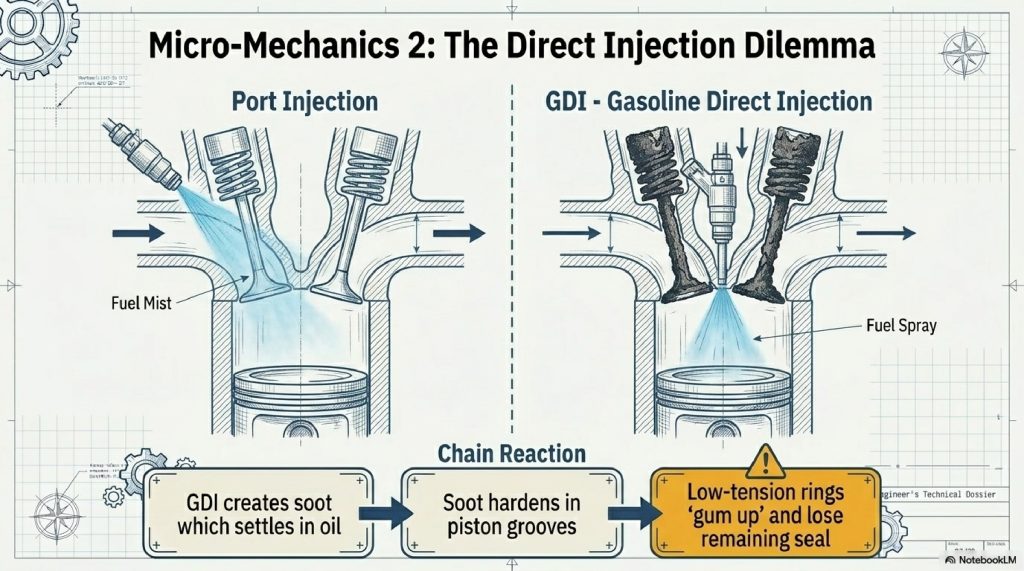
Modern engines use Gasoline Direct Injection (GDI). Unlike older port-injection systems, GDI sprays fuel directly into the cylinder. This creates a “dry” intake valve and leads to increased carbon soot. This soot finds its way into the oil, eventually settling into the piston ring grooves. Once that carbon hardens, the low-tension rings “stick” or “gum up,” losing what little sealing ability they had left.
Real-World Performance: Fuel Economy vs. Longevity
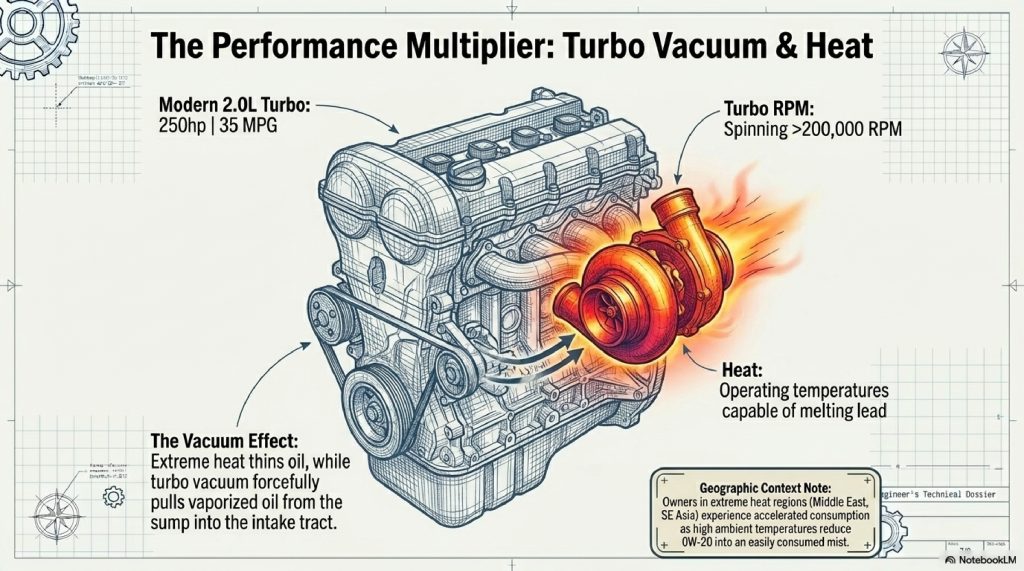
The global automotive market is currently obsessed with “Total Cost of Ownership” (TCO) and environmental ratings. On paper, a modern 2.0L Turbo engine is a miracle, producing 250hp while achieving 35 MPG.
The Reliability Paradox
However, this performance comes at the cost of heat management. Turbochargers are lubricated by engine oil. These units can spin at over 200,000 RPM and reach temperatures that would melt lead. If the oil is too thin or the rings are too weak, the turbocharger itself can become a vacuum that sucks oil out of the sump and pushes it into the intake tract.
Long-Term Ownership Experience
Owners in the Middle East or Southeast Asia regions with extreme heat often see oil consumption accelerate faster than those in temperate climates. Heat reduces oil viscosity even further, making the “0W-20” in your sump behave like a mist, which is easily consumed by the PCV system.
Common Problems: Symptoms and Causes
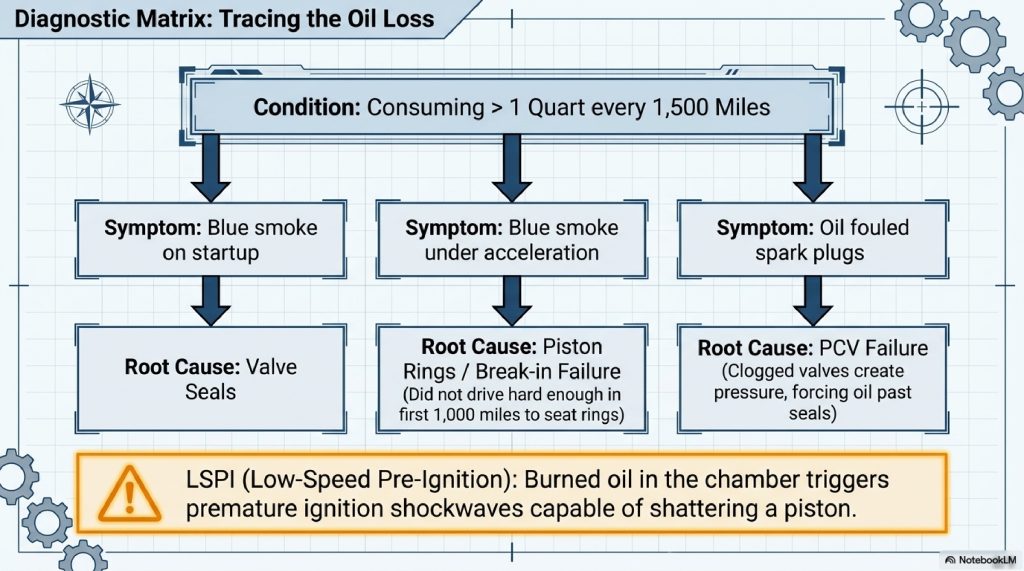
If your car is consuming more than a quart of oil every 1,500 miles, you have a problem. Here are the engineering flaws and user mistakes driving the crisis:
Symptoms: Blue smoke on startup (valve seals), blue smoke under acceleration (rings), or “oil fouled” spark plugs.
The PCV Failure: The Positive Crankcase Ventilation (PCV) system is designed to recycle gases. In modern cars, these valves often clog. A clogged PCV creates high pressure in the crankcase, forcing oil past the seals and into the combustion chamber.
User Mistake: The “Break-in” Failure: Many owners drive too gently during the first 1,000 miles. Modern rings need a certain amount of cylinder pressure to “seat” against the wall. If they don’t seat early, the engine will burn oil for its entire lifespan.
LSPI (Low-Speed Pre-Ignition): Burned oil in the combustion chamber can actually trigger premature ignition, which creates shockwaves that can shatter a piston.
Servicing & Maintenance: The 10,000-Mile Lie
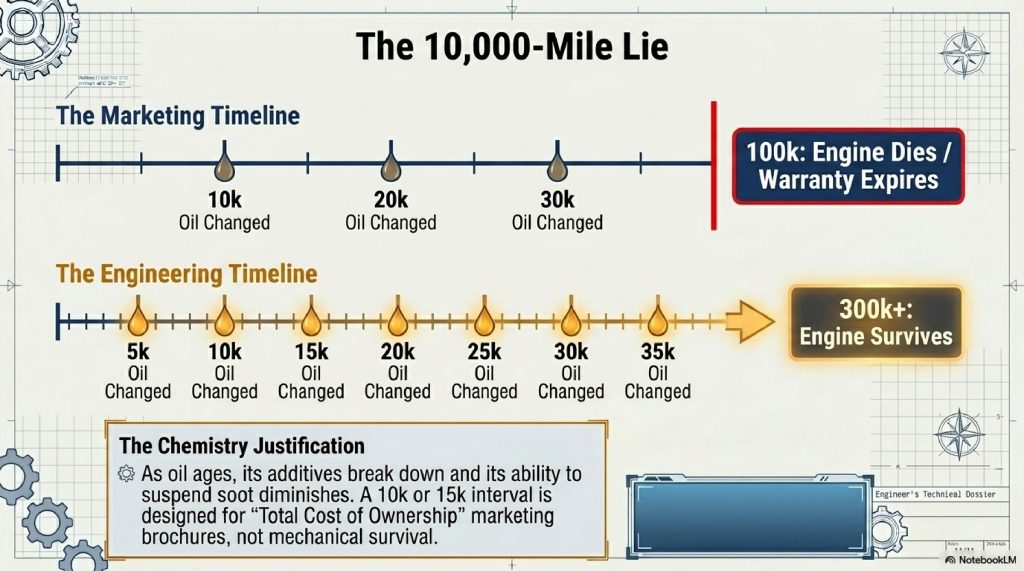
The biggest contributor to oil burning is the extended drain interval. Automakers market “10,000 or 15,000-mile oil changes” to make the car seem low-maintenance.
The Reality of Modern Lubrication
From an engineering perspective, this is disastrous. As oil ages, its additives break down and its ability to suspend soot diminishes.
Intervals: Change your oil every 5,000 miles (8,000 km) regardless of what the dashboard says.
Oil Recommendation: Always use a Full Synthetic API SP-rated oil. The “SP” rating was specifically designed to combat LSPI and timing chain wear in modern engines.
Cooling System: A slightly overheating engine will burn significantly more oil. Ensure your coolant is fresh and the radiator is clear of debris.
Comparison Section: Modern vs. Legacy Engineering
Feature
Legacy Engines (1990-2010)
Modern Engines (2020+)
Piston Ring Tension
High (Robust Seal)
Low (Friction Reduction)
Oil Viscosity
5W-30 / 10W-40
0W-20 / 0W-8
Fuel System
Port Injection (Clean Valves)
Direct Injection (Soot/Carbon)
Induction
Naturally Aspirated
Turbocharged
Oil Consumption
Minimal until 150k+ miles
“Acceptable” from Day 1
The Verdict: Legacy engines were built for durability; modern engines are built for compliance. To make a modern engine behave like a legacy one, you must be twice as diligent with maintenance.
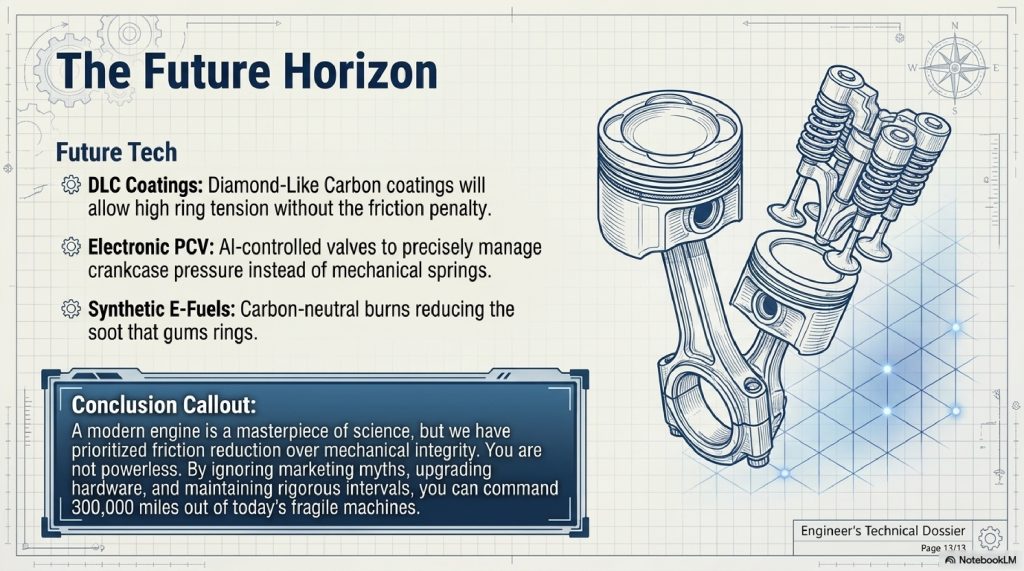
Diamond-Like Carbon (DLC) Coatings: Future pistons will use DLC coatings to allow for higher ring tension without the friction penalty.
Electronic PCV Valves: Instead of mechanical spring-loaded valves, AI-controlled PCV systems will precisely manage crankcase pressure to prevent oil migration.
Synthetic E-Fuels: As we move toward carbon-neutral fuels, the chemical composition of the “burn” will change, potentially reducing the soot that gums up rings.
Historical Background: How We Got Here
In the 1970s, oil burning was caused by poor metallurgy and loose tolerances. By the 1990s, we had “perfected” the engine, many 90s Japanese and German engines could go 200,000 miles without losing a drop. The “Oil Consumption Crisis” began around 2012, coinciding with the massive rollout of GDI and the move to 0W-20 oil to meet the 2016-2025 EPA targets. We effectively traded engine longevity for a 2-3 MPG gain.
Expert Insights: Long-Term Durability Analysis
As an engineer, my observation is that modern engines are not “bad,” they are simply “highly strung.”
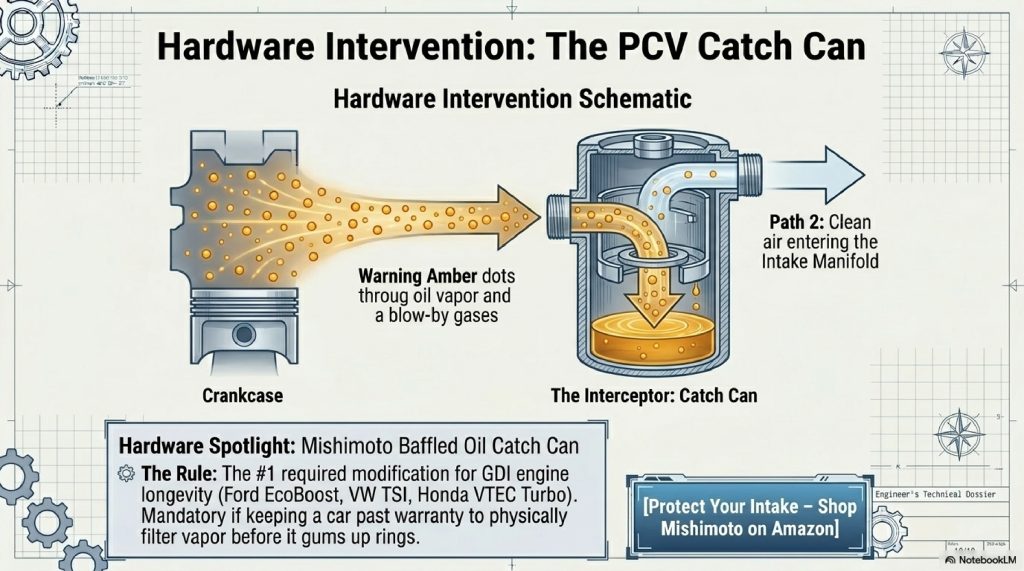
The Catch Can: If you plan to keep a car past the warranty, an oil catch can is mandatory.
The Oil Quality: Do not use “store brand” oil. The shear stability required to survive a modern turbocharger is immense.
The “Italian Tune-up”: Occasionally driving the car hard (once it is at operating temperature) helps generate the cylinder pressure needed to clear carbon off the ring lands.
FAQ: People Also Ask
Q: Is it normal for a new car to burn oil?
A: Manufacturers say yes (often 1 quart per 1,000 miles is “within spec”), but from an engineering standpoint, it is a sign of a compromised seal.
Q: Can I use thicker oil to stop the burning?
A: Switching from 0W-20 to 5W-30 can reduce consumption, but on some very modern engines, it may affect the variable valve timing (VVT) solenoids. Consult a specialist first.
Q: Will an oil additive fix my consumption?
A: Only if the rings are stuck. A “piston ring soak” or high-detergent additive can sometimes free up gummed-up rings, but it won’t fix worn-out low-tension rings.
Conclusion
The “real reason” modern cars burn oil is a complex web of regulatory pressure and engineering compromise. We have prioritized friction reduction and extended maintenance marketing over the mechanical integrity of the piston seal.
However, you aren’t powerless. By ignoring the 10,000-mile oil change myth, using high-quality lubricants, and installing preventative hardware like catch cans, you can circumvent these engineering flaws. A modern engine is a masterpiece of science but only if you maintain it with the rigor that the science demands.
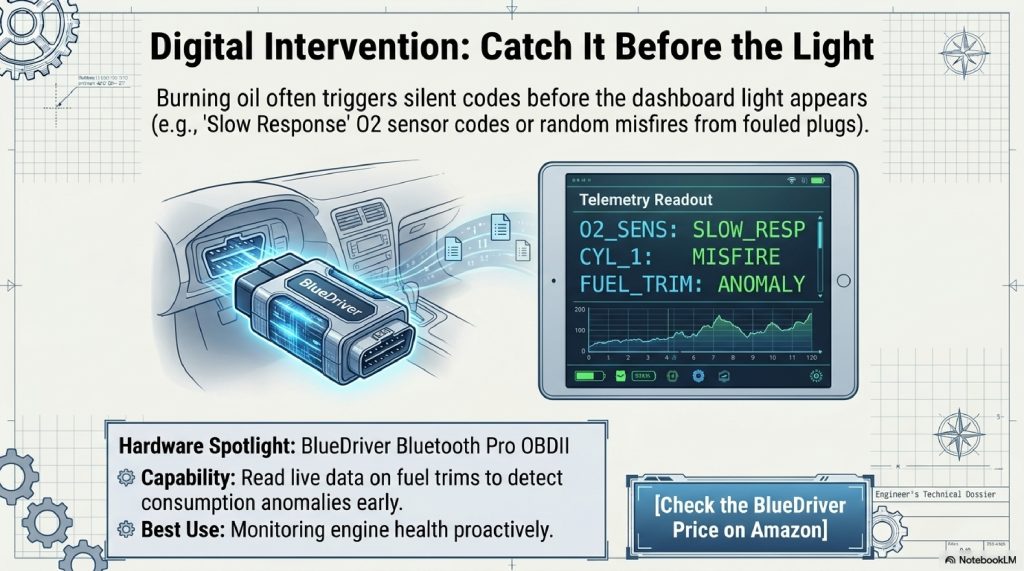
Why it’s useful: When your car starts burning oil, it often triggers “Slow Response” O2 sensor codes or random misfires due to fouled plugs. This tool lets you see live data on fuel trims to detect consumption issues early.
Best Use Case: Monitoring engine health before a “Low Oil” light even appears.
Suggested Placement: After the Technical Explanation section.
Why it’s useful: This device intercepts oil vapor from the PCV system before it can coat your intake valves and gum up your rings. It is the #1 mod for GDI engine longevity.
Best Use Case: Any modern turbocharged or direct-injected vehicle (Ford EcoBoost, VW TSI, Honda VTEC Turbo).
Suggested Placement: Within the “Common Problems” section.